English| EUR
Suggested for you
More currencies
Choose a language
Combining Nara Park and Uji in a single day requires careful sequencing across two cities and three rail lines. The optimal itinerary starts with morning deer encounters at Nara Park before mid-day crowds arrive, then transitions to Uji's temple district in the afternoon when natural light enhances its riverside setting.
Quick answer
A well-structured Nara Uji day trip itinerary begins at Nara Park between 7:00 and 10:00 AM for early deer interaction, allocates three hours for Todai-ji and Kasuga Taisha, then shifts to Uji via JR Nara Line for afternoon exploration of Byodo-in and tea houses. The entire route spans approximately nine hours including transit, with Nara Park's 24-hour open grounds allowing flexible morning starts before the deer feeding rush peaks after 11:00 AM.
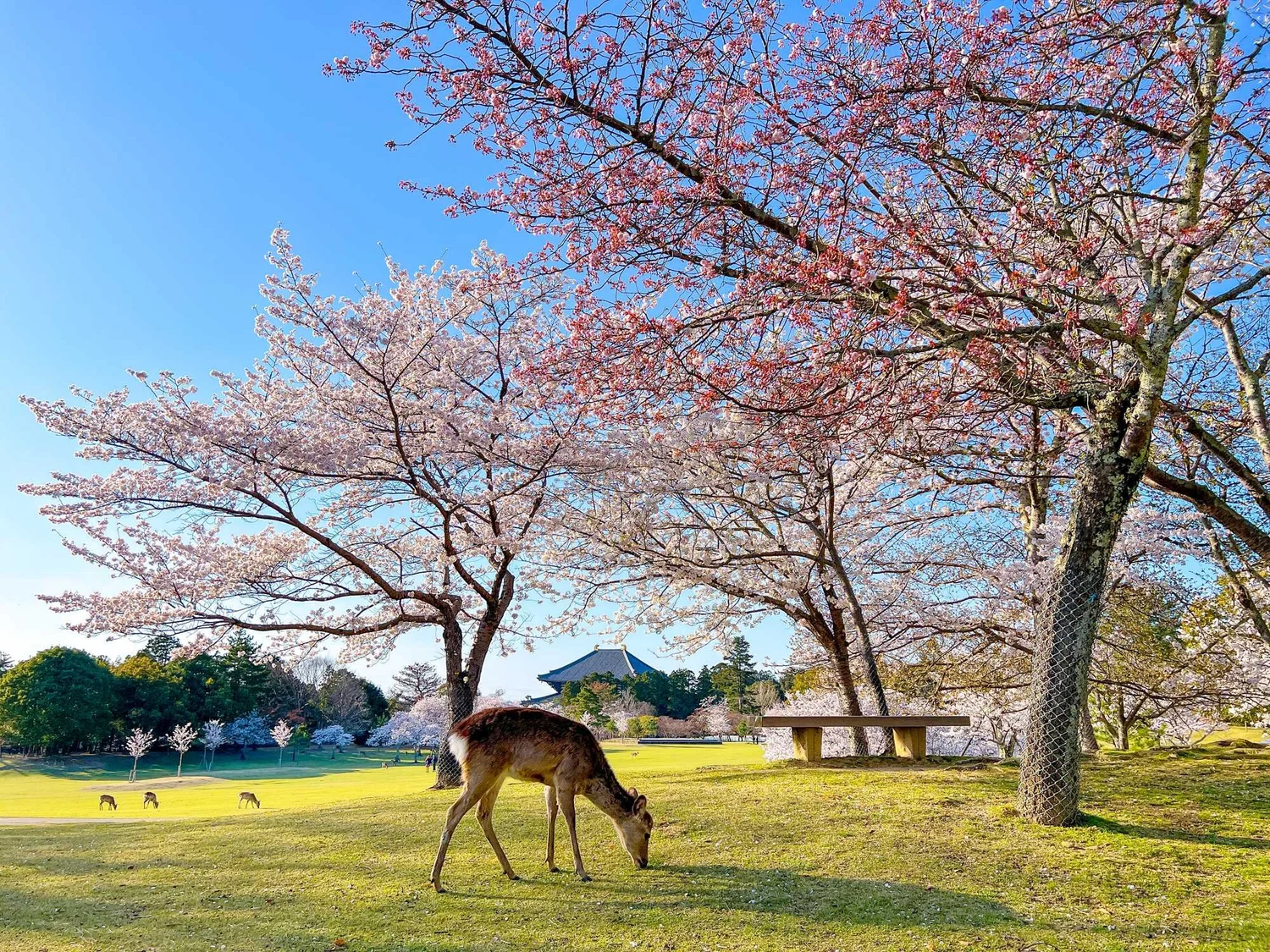
Nara Park operates around the clock with no entrance fee, a logistical advantage that anchors the front half of any Nara Uji day trip itinerary. The 1,300 semi-wild sika deer roam freely across 502 hectares, but their behavior shifts dramatically as tour groups arrive mid-morning—early starters encounter calm animals willing to bow for senbei crackers, while late arrivals face competitive herds and crowded pathways around Todai-ji's Nandaimon Gate. The transition from Nara to Uji hinges on efficient use of the JR Nara Line, a 35-minute local service connecting Nara Station to Uji Station. Most visitors allocate insufficient buffer time between the two destinations, underestimating the walking distances within Nara Park itself—Kasuga Taisha Shrine sits 2 kilometers from Kintetsu Nara Station, and the return journey to board a train consumes another 25 minutes. Departing Nara by 1:00 PM ensures arrival in Uji with adequate daylight for Byodo-in's Phoenix Hall, whose vermillion facade photographs best between 2:00 and 4:00 PM when afternoon sun illuminates the facade without harsh overhead shadows. Uji's compact geography works in favor of tight schedules. Byodo-in, Ujigami Shrine, and the matcha district cluster within 15 minutes' walk of each other along the Uji River. The key decision point in any combined Nara and Uji itinerary is whether to prioritize temple interiors or tea-house experiences—both compete for the same late-afternoon hours. Byodo-in's museum closes at 5:00 PM, while traditional tea houses accept walk-ins until 5:30 PM, creating a forced choice that defines the trip's final segment. The return leg to Osaka or Kyoto from Uji uses the Keihan Uji Line, a faster option than retracing the JR route through Nara. This triangular routing—Osaka/Kyoto to Nara via Kintetsu or JR, Nara to Uji via JR, Uji back to Kyoto via Keihan—minimizes backtracking and positions travelers for evening arrival in their base city. The itinerary's success depends less on rushing through landmarks than on respecting the 90-minute transit envelope that brackets the day's two anchor sites, allowing three hours in Nara and two in Uji as a sustainable minimum.
“The transition from Nara to Uji hinges on efficient use of the JR Nara Line, a 35-minute local service connecting Nara Station to Uji Station.”
This itinerary suits travelers wanting to experience Nara's wildlife and Uji's tea culture in one day. The route covers approximately 8-9 hours including travel between cities.
Reach the park grounds during the quiet morning window when deer are most active and crowds are minimal. Spend 90 minutes exploring the open lawns and feeding the deer with official crackers available from vendors.
Walk to the nearby Great Buddha Hall, Nara's most significant temple structure. Allow 60-75 minutes to tour the hall and surrounding temple precincts before mid-day tour groups arrive.
Follow the forested path lined with stone lanterns to this vermillion shrine complex. Budget 45 minutes for the main halls and lantern corridors, then begin your transition toward Nara Station.
Board a JR Nara Line train for the 30-40 minute journey south to Uji, arriving in early afternoon. Grab lunch near Uji Station or along the approach to Byodoin.
Visit this UNESCO World Heritage temple famous for its Phoenix Hall, featured on the 10-yen coin. The interior requires advance reservation, but the gardens and museum merit 60-90 minutes.
Walk the traditional streets sampling matcha soft serve, visiting tea shops, and observing tea production methods. The district sits between Byodoin and Uji Bridge, easily covered on foot.
Stroll along Uji River to see the historic bridge and cormorant fishing statues before heading to Uji Station for your return journey. Evening trains run frequently back to Kyoto or Osaka.
For a joint Nara and Uji day trip, the best arrival window is 07:00–10:00. Arriving during this period allows you to experience Nara Park with fewer crowds and more active deer before continuing to Uji.
Mild, 10°C to 20°C. Popular for cherry blossoms.
Cool, 12°C to 18°C. Foliage peaks in November.
—. Optimal for quiet interaction with deer.
Hot and humid, 25°C to 33°C. Frequent rainfall occurs in June.
Verdict: The most effective strategy is to arrive at Nara Park between 07:00 and 10:00 on a weekday during April or October.
Nara Park is located in central Nara, with convenient rail connections available for travelers continuing to Uji. The most efficient way to travel between these two areas is by using the JR Nara Line.
JR Nara Line from JR Nara Station to JR Uji Station
Kintetsu-Nara Line to Yamato-Saidaiji, transferring to Kintetsu-Kyoto Line for Uji
From Kintetsu-Nara Station to Nara Park
For the best experience, aim for the best arrival window of 07:00–10:00 to avoid mid-day crowds and ensure optimal interaction with the deer.
Nara Park remains accessible to visitors throughout the week, offering consistent access for your day trip itinerary.
Nara's deer are semi-wild and protected, while Uji's temples demand quiet respect. Following local conduct norms ensures safe interactions and preserves the experience for others.
Everything you need to know about nara uji day trip itinerary
A joint trip is entirely possible because the cities are connected by the Kintetsu and JR lines. Proper planning ensures you have enough time to see the primary cultural heritage sites in both locations.
The best arrival window is 07:00–10:00 to avoid mid-day crowds and ensure the best interaction with wildlife. Starting early allows you to explore the park before moving on to your next destination.
Entrance fee to the park grounds is 0 JPY. You can enjoy the open green spaces and roaming deer without purchasing a ticket.
Most travelers choose to spend their morning in Nara to see the temples and deer, then head to Uji in the afternoon for tea ceremonies. This balance creates a comprehensive Nara and Uji landmarks tour.
It is generally recommended to start at Nara Park to witness the Shinto shrines in the morning, followed by an afternoon visit to Uji for its tea culture and river views. This sequence optimizes travel time between regional transit hubs.
Visitors must observe caution as the animals are wild. Refrain from teasing them or leaving food containers behind, and only feed them the designated shika senbei crackers available locally.
While Nara Park is walkable, the full journey between the two cities requires regional train transit. Relying on local rail connections is the most efficient way to maintain your Nara and Uji landmarks tour schedule.
Nara National Museum Hours
Read more GuideIs It Better to Go to Nara From Osaka or Kyoto?
Read more GuideHow to Get to Nara Park From Osaka
Read more GuideDistance Between Kyoto and Nara
Read more Tickets & toursNara and Uji Tour from Kyoto
Read more Tickets & toursNara and Uji Tour from Osaka
Read more